

Lately, I’ve been thinking about how people connect in their thirties—or don’t. The shortcuts of proximity and the easy camaraderie of moving through the same life stages together are mostly gone; now it feels inevitable that we drift apart as our lives both expand and shrink at the same time.
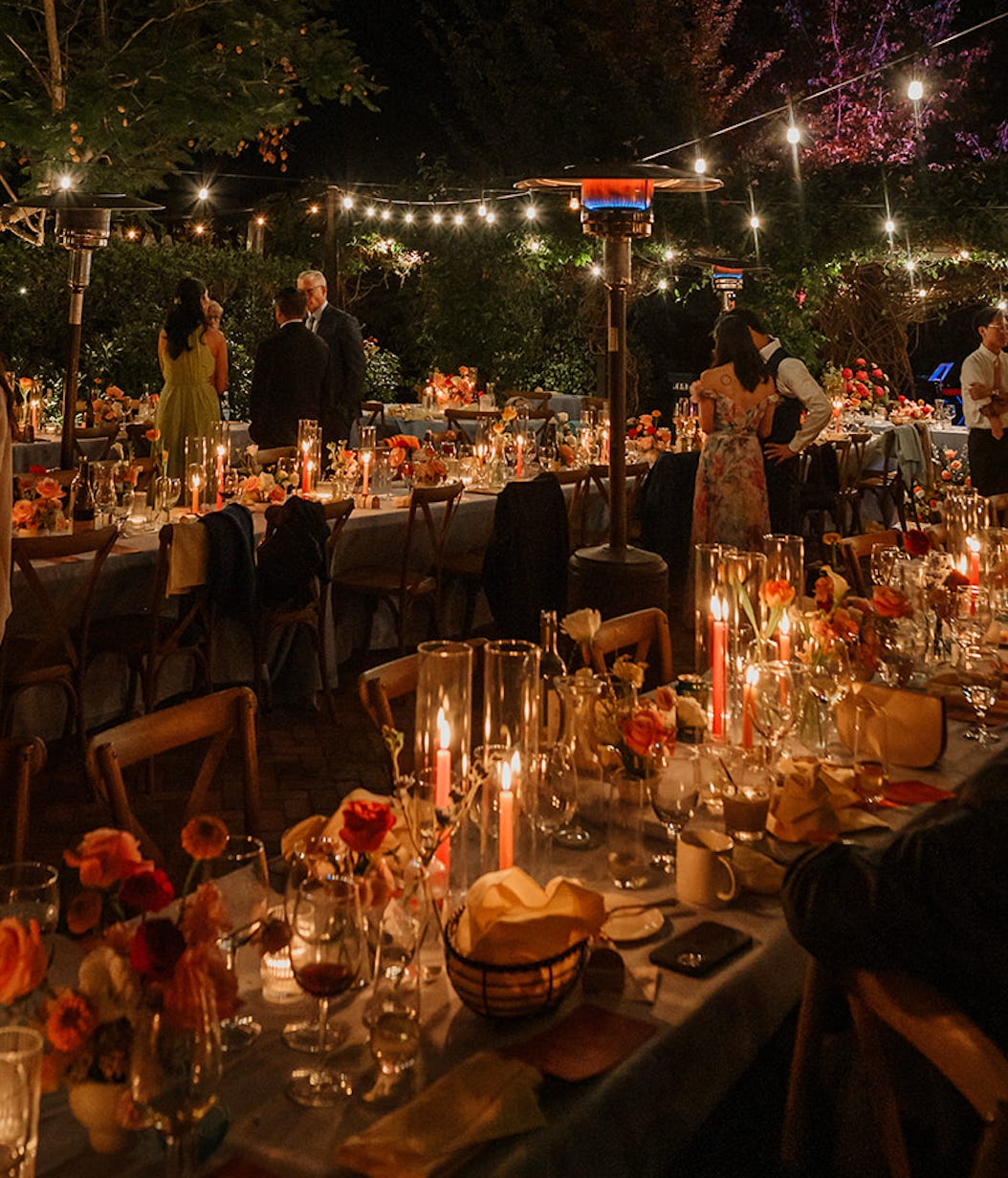
A few recent life events—my wedding and a recent diagnosis—have made me more aware of these shifts, though not in any profound way. For my body’s sake, I’ve needed to accept that now I have to become more prudent with how I spend my energy.1
It’s something I’ve mostly accepted and stopped trying to force. My closest friends live pretty far away from me, and while I’m happy whenever we manage to see each other, I still miss the days of closeness—the kind of safety that triggers the opposite of peace: total gremlin behavior. Hyena laughter, bizarre accents, bits no one else would understand—all the hypomanic tendencies of a teenage sleepover, distilled into the interactions in a relationship.
James and I like to call this “matching each other’s freak.”2 Others (maybe those who don’t listen to Tinashe) might call it “vibing” or “being on the same wavelength”—but that feels a bit too sanitized. You need a little unhinged chaos to be fully yourself. This love language is incredibly underrated, and it’s necessary for any relationship to feel life-giving.
Which is why I don’t buy the idea that the answer is just to limit where you spend your energy. I wouldn’t recommend the idea of thriving only by cutting costs to a business (literally my job), so why would I recommend it to myself? The more I pay attention, the more I suspect the real question isn’t how little energy can I spend? but rather, Why do some people give my energy back?
Maybe what we call “friend chemistry” is just a match of social energies: how we think, how we interpret, and how we attune to each other. Once I started seeing friendship through this lens of energy—not personality or life stages—I started to see some patterns.
I recently went to a party with an excellent hostess. Naturally, we remarked on the decor, food, bar, snacks—all the elements of a great experience, the kind you might see featured on TikTok. Several of the girls I chatted with expressed envy of said TikTok trends like Cookbook Club, Cake Picnic, or Home Cafe. The sentiment was basically: “Where are these people? How do I find friends like this?” It struck me that we were all quietly waiting for someone else to be that friend.
The last time I felt that kind of shared energy at a party (aside from my wedding, I guess) was a campy murder mystery dinner I threw with my best friend somewhere in my mid-twenties. I wrote the clues and planned the menu, while Kristine designed the assets and curated the guest list. We had so many late nights sitting in her apartment giggling over the stupid details we created (Lambchop, the family name, was pronounced “lahm-show”). When the guests arrived, they fully lived out their characters—the friend playing the self-obsessed son character brought a cake with his name on it, others came in fully decked out in period-piece costume, some pulled out accents with the energy of a theater troupe…


Lately, I keep thinking about that party and what made it so special. It was thoughtful and high effort, but it would have flopped if the guests hadn’t fully committed. We chose the right people for the roles without realizing exactly why—we just identified people whose social energy we suspected would fit with ours.
I once went on a triple friend blind date and, as suspected, it was terribly awkward and we never talked to each other again. However, someone there referenced a professor (allegedly; someone can fact check me later) who said that the three components of friendship were positivity, vulnerability, and consistency. That all makes sense in a textbook way, but doesn’t quite address the friend “chemistry” question I keep circling around.
I am no social scientist or psychologist, but my fondness for personality inventories and the old era of BuzzFeed quizzes makes me wonder—what if we could actually index social energies? So that we could tell when we met someone new, how quickly or with how much effort it might take to click?
So, for fun, I decided to sketch my own tiny “social chemistry framework”—nothing scientific, just a novelist’s attempt to understand why some people feel instantly easy and others feel like heavy lifting. The names are kind of WIP, but the two axes that keep resurfacing so far are “meaning orientation” and “inference style.”
Meaning Orientation
At what altitude do you naturally process conversation? I think there are three variants:
Surface: They like to track facts, logistics, observable details, for smooth conversations and clarity of thought, even if they sometimes miss emotional layers.
Story: They like to organize experiences into narratives, or draw connections—even when there might not be any—but can bring a lot of color, flow, coherence into a conversation.
Subtext: They like to thread the needle between unspoken motives, patterns, and emotional currents. Sometimes they can provide a lot of insight and naturally deep conversations… and other times can make folks feel like they are being psychoanalyzed.
I think most of us end up somewhere in the middle in practice, but where does your proclivity lie?
I see this play out at the lunch table at work a lot, where the conversation is encouraged to stay surface/story-level for sake of professionalism: vacation plans, the weather, favorite restaurants, weekend plans, movies/shows we’ve seen lately. It’s good fun and helps you learn about each other: so-and-so is a cinephile, this person is a foodie, someone is quite the wild adventurer…
Occasionally, someone will throw a curveball into the ring: Would you rather win the genetic lottery, or the actual lottery? And why? Everyone took a turn to answer, but those who prefer subtext spun it out of control into an hour-long discussion with lots of personal stories about capitalistic structures, privilege, and what truly makes for a meaningful life (everyone else left—also because we should have been working). I became a lot more interested in folks after hearing their stances here—even if I disagreed with them, I felt more connected.
I think those of a similar orientation are more likely to instantly click. Not saying opposites can’t get along, but there’s a risk that subtext folks feel starved for deeper connection and surface folks feel that the mood got heavy out of nowhere when there’s too big of a mismatch. I think the chemistry happens more easily when people process meaning similarly.
Inference Style
How do you expect needs and boundaries to be communicated? Do you believe that people should say what they need, or that people should read the room and anticipate needs? Neither style is “better”—they just create friction when the expectations don’t match. Explicit communicators assume clarity is respectful; implicit communicators assume consideration is respectful—which is why they end up inferring intent so differently.
For example, imagine you’re in a group and one person is dominating the conversation:
An explicit communicator might think, “If someone else had something more interesting to say, they’d speak up—at least, that’s what I’d do” and trust others to speak for themselves.
An implicit communicator might think, “Does that person realize they’re dominating the entire conversation? Should I change the subject so someone else can have a turn?”
I suspect:
Explicit + explicit get along in general—they are direct and efficient, and even if they butt heads, they can establish respect if nothing further than that
Implicit + implicit get along—they intuit each other well, especially in group settings where their attunement can shine
Explicit + implicit do not get along unless they adjust—though the roles aren’t always super evident if you first meet in a 1:1 setting.
In friendships and especially romantic relationships it’s easy for things to become one-sided—left unchecked the implicit’s needs go unmet and resentment builds up over time.
The key to overcoming this is meeting somewhere in the middle—so it’s not necessarily a friendship doomer but just that this type of relationship requires more investment (though operating outside your natural inclination) for sustained connection
Two other variables I can’t quite ignore, but chose to exclude from my “social chemistry framework” are proximity and EQ. Proximity—both physical proximity and common interests—creates the spaces in which the chemistry can grow. (It doesn’t matter how well you hit it off with someone if you never see each other again!) And sure, EQ is important, since without self-awareness we’re all insufferable long term. However, I feel like it’s not actually a big dealbreaker for true connection—if anything, it might help smooth over a blunder or two but doesn’t pave the road itself. These aren’t the seeds that sow connection, just the soil it grows in.
I wonder if understanding where we fall and what we seek in these spectrums can help us notice friendship at an earlier point—especially ones that can bring out the gremlin freaks inside of us all. Maybe adulthood isn’t about losing the closeness we once had, but learning how to recognize it in the forms that actually sustain us rather than drain us… so the question isn’t whether we have enough energy, but how precisely we choose to spend it.
The same could be said for how I spend money, but that’s a topic for a different day—preferably one after Black Friday!
An example: We all know James is the superior gamer, but sometimes I pop off. When I get too excited, I do Spongebob’s victory screech, try to chest-bump him, and sprint around the house. A normal person would think, “da fuq?” but James morphs into a shrieking baboon and joins in on the celebration.